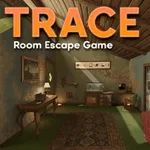








TRACE
TRACE: A Masterclass in Logic and Observation
| Metric | Data |
|---|---|
| Developer | Lojic Studios |
| Genre | Escape Room / Puzzle |
| Platform | Web / Mobile |
| Core Loop | Deduction & Synthesis |
Stepping into TRACE feels like entering a silent, static world where every pixel demands your absolute focus. Unlike games that rely on adrenaline, TRACE forces you to slow down and process the environment with clinical precision. You are trapped, yet the game never rushes you, trusting that your brain is the ultimate tool for survival.
The beauty of TRACE lies in its minimalism. By removing the threat of enemies, the developer ensures that the focus remains entirely on the spatial awareness required to progress. If you find yourself staring at a blank wall, it is likely because you have missed a subtle color shift or a pattern that TRACE has hidden in plain sight.
The Art of Environmental Analysis
Success in TRACE requires a shift in perspective. You cannot simply click on interactive elements and hope for a trigger to fire. Instead, you must catalog every visual cue you encounter, building a mental map of how these disparate pieces fit together. TRACE rewards the meticulous player who takes notes on symbols and sequences.
Many players fail to progress because they treat TRACE as a linear experience. It is not. You will often need to backtrack to earlier areas once you have discovered a key or a code that makes sense of a previously cryptic message. This non-linear design is the hallmark of a high-quality puzzle experience.
Mastering the Mental Inventory
Your inventory in TRACE is not just a digital menu; it is a collection of memories. You must keep track of shapes, colors, and numerical codes that seem irrelevant upon first glance. The game engine is designed to test your retention, and TRACE is unforgiving if you let a vital clue slip your mind.
Pro-Tip: Keep a physical notepad nearby. The mental load of tracking complex patterns in TRACE is significant, and externalizing your notes is a core part of the intended gameplay loop.
Navigating the Intricate Logic of TRACE
To truly conquer TRACE, you must understand the underlying logic of its puzzle design. Every mechanism, from complex wall-mounted devices to simple interactive boxes, operates on a set of internal rules. Learning these rules is the only way to advance through the deeper levels of TRACE.
The difficulty curve is subtle but punishing. While the early stages of TRACE introduce you to the basic mechanics, the later sections require you to synthesize information across multiple screens. You might find a clue in one room that only becomes useful when applied to a mechanism in another, making TRACE a test of spatial reasoning.
Strategic Deduction Techniques
When you feel completely stuck in TRACE, the best approach is to categorize the puzzles you have already encountered. Ask yourself what kind of interaction is required: is it a pattern match, a sequence order, or a simple key-lock interaction? By breaking down the challenges in TRACE, you reduce the overwhelming nature of the environment.
- Identify recurring symbols and color palettes across different zones.
- Verify if any interactive objects have changed state after a previous action.
- Document every numerical sequence found within the TRACE environment.
- Test potential combinations on every locked device you have yet to open.
The satisfaction of finally clicking the right sequence in TRACE is unmatched. It is a pure, cerebral victory that validates your patience and logical deduction. Because TRACE does not hold your hand, each solved puzzle feels like a genuine achievement rather than a scripted event.
Overcoming the Progression Plateau
If you find that your momentum in TRACE has stalled, it is time to change your observation strategy. Often, the solution is not behind a locked door, but in the way you interpret the clues you already possess. TRACE is excellent at hiding information in the periphery of your field of view.
Consider the lighting and the negative space within the rooms of TRACE. Sometimes, the placement of objects relative to one another provides the context needed to solve a puzzle. You must be willing to look at the game not just as a series of tasks, but as a cohesive, interconnected system.
Frequently Asked Questions About TRACE
How can I keep track of the many codes and symbols in TRACE?
The most effective way to manage the information density in TRACE is to maintain a dedicated notebook. Because the game requires you to recall information across different rooms, documenting every pattern, color sequence, and numerical code is essential for success.
Why am I unable to progress even after finding several items in TRACE?
If you are stuck, it is likely because you have not yet linked the items in your possession to their respective mechanisms. Remember that TRACE often requires you to revisit areas with new tools or information, so re-examine previous rooms with your current inventory to see if a new interaction is now possible.
Is there a specific order for solving the puzzles in TRACE?
While some progress in TRACE is gated by specific items, much of the exploration is non-linear. You should prioritize solving the puzzles that are most accessible, as these will often provide the clues necessary to unlock the more complex, gated areas of the game.
Ultimately, TRACE is a game about presence and awareness. It asks you to be fully engaged with its world, rewarding your attention with a satisfying sense of accomplishment. Whether you are a veteran of escape room titles or a newcomer looking for a challenge, TRACE offers a refined experience that respects your intelligence.
The game stands as a testament to the fact that you do not need flashy graphics or high-octane action to create an immersive experience. Through sound design, environmental storytelling, and tight puzzle loops, TRACE manages to keep you hooked for hours. Keep exploring, keep observing, and you will eventually find your way out of TRACE.
To master TRACE, you must internalize the visual language of the environment. Every object is a potential key, and every color is a potential clue. Do not underestimate the importance of meticulous documentation when playing. When you finally reach the end of TRACE, you will realize that the real reward was the sharpening of your own logical faculties throughout the journey.