



Block Blast
Block Blast: Navigating the 10x10 Grid Logic
| Metric | Specification |
|---|---|
| Developer | Hungry Studio |
| Grid Dimensions | 10x10 |
| Primary Input | Drag-and-Drop |
| Failure State | Grid Saturation |
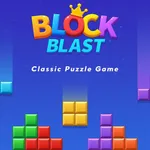
At its core, Block Blast functions as a deceptive exercise in spatial management. While the vibrant aesthetic suggests a casual experience, the underlying engine demands rigorous logical processing. Each session of Block Blast forces you to evaluate the 10x10 grid with the precision of a high-stakes strategist.
Many players approach Block Blast under the false assumption that filling lines as quickly as possible is the optimal path. However, the game engine tracks your efficiency, and failing to maintain open space leads to rapid grid saturation. Understanding the mechanical flow is the first step toward mastery in Block Blast.
The Grid Constraint
In Block Blast, the primary interaction is the drag-and-drop mechanism. You are presented with three distinct shapes that must be placed to clear either horizontal or vertical lines. Because you cannot rotate these pieces, Block Blast creates a rigid set of constraints that test your ability to visualize future configurations.
The game does not provide a buffer or a secondary storage area. This means that every placement in Block Blast is final. When you drag a piece, you are effectively locking in a decision that determines the availability of future moves. If you do not plan for the specific shapes provided by the Block Blast algorithm, you will find yourself in a dead-end scenario.
Managing the Dead Zone
The edges of the grid often become what veteran players call the Dead Zone. In Block Blast, neglecting these outer tiles leads to inevitable failure. You must prioritize clearing lines along the perimeter to keep your options open.
- Always keep the center clear for large, multi-tile shapes.
- Use small pieces to fill gaps that larger Block Blast shapes cannot reach.
- Avoid building tall, uneven stacks that cut off access to the grid floor.
Pro-Tip: Never clear a line if it prevents you from placing a larger, more difficult shape later in your Block Blast session. Always maintain a 'reserve' of open space.
The Illusion of Infinite Space
The progression loop within Block Blast is designed to lure you into a false sense of security. As you clear lines, the game rewards you with satisfying visual feedback, which often encourages reckless placement. To succeed in Block Blast, you must suppress the urge to clear lines immediately and instead focus on long-term grid health.
Pattern Recognition
Success in Block Blast relies on your ability to recognize recurring geometric patterns. The game engine pulls from a set library of pieces, meaning that over time, you will start to anticipate which shapes are coming next. By identifying these patterns, you can prepare your board for the incoming Block Blast tiles.
Experienced players utilize spatial mapping to mentally project where shapes will fit before they even touch the screen. If you practice this technique, you will find that Block Blast becomes far less about reaction time and much more about deliberate, calculated placement. Every move in Block Blast should serve a purpose.
Cascading Logic
The most effective way to boost your score is through cascading clears. When you clear multiple lines simultaneously, Block Blast awards a multiplier that scales significantly. Achieving these multipliers requires you to set up the board so that several rows or columns are ready for completion at the same time.
This is where the true difficulty of Block Blast emerges. You must balance the immediate need to clear space with the desire to build a complex, multi-line setup. If you prioritize the cascade too heavily, your grid will fill up, ending your Block Blast run prematurely.
Mastering the Flow State
To reach the upper echelons of the leaderboards, you must enter a flow state where your hands move in sync with the game's logic. Block Blast demands a level of focus that is surprisingly meditative. Once you stop fighting the grid and start working with the shapes, the mechanics of Block Blast become second nature.
- Analyze the current grid layout for potential bottlenecks.
- Select the shape that addresses the most critical void.
- Execute the placement and observe the board's new state.
- Repeat until the Block Blast session reaches its conclusion.
Ultimately, Block Blast is a game of attrition. The longer you survive, the more complex the shapes become and the less room you have to maneuver. Strategic patience is the most valuable asset you can bring to the table. By maintaining a clean grid and avoiding impulsive moves, you can extend your Block Blast sessions significantly.
If you find yourself stuck, take a moment to look at the board as a whole rather than focusing on the individual pieces. Often, the solution to a Block Blast puzzle is hidden in plain sight. Keep your eyes on the entire 10x10 area, and remember that Block Blast rewards the disciplined player.
Frequently Asked Questions About Block Blast
How can I prevent my grid from filling up too quickly in Block Blast?
The best way to prevent rapid grid saturation is to avoid creating isolated, single-tile holes. Focus on clearing lines near the edges first, as these are harder to fill later in a Block Blast match. Always reserve a 2x2 or 3x3 space in the center to accommodate the larger, more awkward shapes that the game will inevitably throw your way.
Why is my score not increasing despite clearing many lines?
In Block Blast, score multipliers are tied to clearing multiple lines at once. If you are clearing lines one by one, your score will remain low. To maximize points, you must chain your moves by preparing multiple rows or columns to be completed simultaneously, which triggers a massive scoring bonus within the Block Blast engine.
Are there any secret techniques for high-level play?
Advanced players utilize a technique called 'stacking,' where you build high rows in one section of the board to force the game to provide specific pieces. By narrowing the available space, you can manipulate the probability of receiving the shapes you need. This is a high-risk, high-reward strategy that defines competitive Block Blast gameplay.
As you continue to refine your skills, remember that Block Blast is ultimately about the journey of improvement. Whether you play for five minutes or an hour, each Block Blast session is an opportunity to sharpen your spatial reasoning. The game is simple to learn but infinitely deep, ensuring that every Block Blast round offers a fresh challenge to overcome. Keep practicing your placements, stay calm when the grid gets tight, and you will soon find yourself topping the Block Blast charts with ease. Block Blast remains a staple for puzzle enthusiasts everywhere, and with these strategies, your next Block Blast high score is well within reach.